The smart Trick of Transfer 8mm Film To Digital That Nobody is Talking About
In addition to the naturally much better capture, software on the computer system can carry out image processing to eliminate flaws like scratches, do color balance correction, and set light levels. Up-converting from the film's natural frame rate to videos 30 fps can be carried out in a smart method to minimize the distortions that might occur.
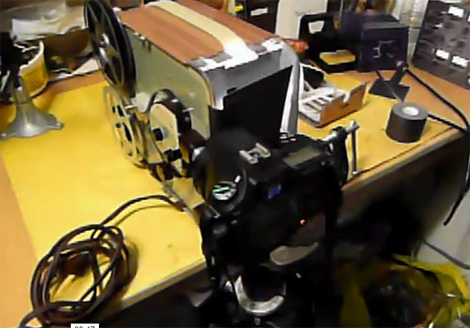
With good building and cautious operation, frame by frame capture can rival the quality obtained by high-end scanning devices (explained next). However, nothing is ensured; some frame by frame equipment is not well made, or the operator of the equipment may be careless or unskilled. Here are a couple of links to people who make this kind of devices, some just for individual usage.
The Single Strategy To Use For Transferring 8mm Film To 8mm Film Transfers Digital
I will keep in mind that Fred Van de Putte has produced some stunning outcomes with his house made equipment: There are specially developed machines for transferring film to digital format; these makers were first used by high end video production companies to move theatrical movies to digital format for broadcasters to use.
The word you must use when doing searches on the topic is "telecine." Like the "frame by frame" capture simply explained, movie scanners likewise capture images a frame at a time, but in a more sophisticated method. Instead of taking a snapshot of each frame, like a video camera, they scan the movie a line at a time and even a pixel at a time.
Some Ideas on 8mm Film Digitalization You Should Know
Such equipment is usually part of a suite of hardware dedicated to image processing, with qualified operators to change lighting and appropriate color. When discussing color correction, there are a few terms to discover. The very best quality, and most pricey, is "scene by http://query.nytimes.com/search/sitesearch/?action=click&contentCollection®ion=TopBar&WT.nav=searchWidget&module=SearchSubmit&pgtype=Homepage#/slides to digital scene" correction. The operator will change lighting and color correction for each scene, and will ensure consistency in the colors between different scenes.
"One light", the most affordable technique, means the colorist will make a finest compromise that seems to work across all scenes; in truth, if there is a remarkable shift in lighting or color, the colorist will likely rewind and adjust at that point. Another benefit of film scanners is they advance the film continuously, instead of using the common sprocket advance and register scheme.
Examine This Report on 8mm Film Transfers
Some old films can even shrink, causing bad gear hole spacing. The film scanner software application has a way of signing up each frame without relying on sprocket holes to do the task. Having actually been around for a long time, these high-end film scanners are now getting low-cost enough for usage in recording house films.
In either case, the quality is most likely to be a cut above frame by frame capture devices. To process 8mm movie, these machines need customized adapters, given that they were developed for 16mm and 35mm work. Rank Cintel scanners were the leading end scanners, however the Spirit Data Cine 4K now appears to be the (very pricey) top end.
Rumored Buzz on 8mm Film Digitalization
No matter which capture scheme is used, ultimately you need to choose in what form do you want your digitized video to be gone back to you. All such locations use to move you films straight to DVD. They can include titles and even climatic music if you desire it. It is possible to get the video off of these DVDs for subsequent modifying, but it is already heavily compress MPEG 2 video, and isn't practical for modifying.
Another choice is to have actually the movie transferred to a DV video tape; these tapes are digital format, and require some means of transferring the bits from the tape into your PC for further modifying. DV files are reasonable for modifying, as they offer frame level access with moderate compression.

The smart Trick of 8mm Film Transfers That Nobody is Discussing
I sent by mail a portable difficult drive to the capture home and they returned my movie as uncompressed AVI files. Uncompressed video leads to big files, but the benefit is that there are no compression artifacts to fret about, and editing at an arbitrary frame level is no issue. As a comparison, a basic meaning MPEG 2 video found on a DVD is generally encoded at 3.5 to 8.0 Mbit/s; DV is 25 Mbit/s; uncompressed video is around 240 Mbit/s.
What resolution should the movie be recorded? What video container format should be utilized? What kind of code should be used to put the video in the file? Should the film be recorded with pulldown? Interlaced or progressive format? Some of these subjects (such as choice of codec) require their own websites, however here is a really, really short summary of a few of these factors to consider.
Digitalization Of 8mm Film for Dummies
It does cost more, though, and processing the results is a lot slower than catching at basic meaning resolution (720x 480). Bear in mind that http://www.thefreedictionary.com/slides to digital 8mm frames are rather small (less than 8mm!) and don't inherently contain more than a particular quantity of info. Getting 1920x 1080 capture of such movie will simply offer you really clear photos of the movie grain.
As was pointed out, the native movie rate is 16 fps or 18 fps for 8mm film, 24 fps for 16 mm film, and 30 fps for video. One way to convert the native movie frame rate to the video frame rate is to replicate some frames in the video stream.
The 20-Second Trick For 8mm Film Transfers
Ask the transfer house to give you one frame of video for each frame on the movie. You can do frame rate conversion after you have done all of your film modifying and improvement. TV has actually historically presented video in interlaced format, provided at 29.97 fps (in The United States and Canada).

Deinterlacing software application can be utilized to transform interlaced back to progressive format. If you have an option, stick to progressive scan, as it makes subsequent image processing jobs easier. If you use an Apple Mac computer system for editing, you probably desire to use quicktime MOV format as the file container.
The Main Principles Of 8mm Film
If you use a PC, you'll probably want to use an AVI file container. For a codec, you should avoid anything that uses a great deal of compression. Extremely compressed files are fairly little, however causes quality loss and problem in modifying. You wish to save compression to the very end of your chain of editing tools.
There are some lossless compressors, like huffyuv and lagarith. Apple Pro Res video is also called v 210 by its fourcc code, and there are PC codecs for reading this uncompressed format. No matter which format you choose, you must first request a little (like 10 frame) sample of movie encoded because format from your transfer home so you can validate that you are able to open it and recuperate the images.
Some Known Factual Statements About Transferring 8mm Film To Digital
Old movies can be dusty, or have a build-up of gunk from a life time of handling. Old movies typically have suffered scratches; which side of the movie is scratched makes a distinction. Less expensive transfers merely load your old movie and go. The next action up is to have the film "cleaned" by mechanically passing it between brushes to try and knock off any dust or dirt.